


Business Central Cloud with multiple companies – how do you manage master data efficiently? Groups using a Business Central Cloud solution, where individual companies are distributed across multiple environments and legal entities, can benefit from distributing master data from a central master data company. What solutions are available for this purpose?
April 14, 2026 - By Nicolai Strøm Christensen
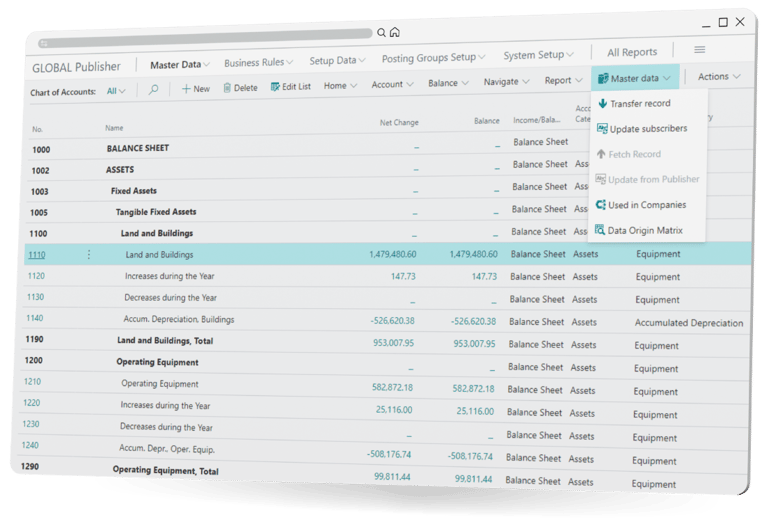 Groups will use Microsoft Dynamics 365 Business Central Cloud with multiple environments and legal entities - for example across countries, companies, or corporate groups.
In these setups, a classic need arises:
To maintain master data in one central place and distribute it securely and consistently to other legal entities.
However, Business Central does not fully support this as standard. Therefore, many companies choose an extension application for master data management.
Why is central master data management a challenge in Business Central Cloud?
When Business Central is used in a structure with multiple databases and legal entities, an organizational and technical challenge around master data quickly arises. Each legal entity functions as an independent unit by default, which means that the same data is often created and maintained in multiple places. Over time, this leads to inconsistent data, differing practices, and increased administrative workload.
Especially in groups and international organizations, this becomes a limitation, as consistent master data is a prerequisite for shared processes, comparable reporting, and efficient operations. Although Business Central Cloud offers strong standard functionality, central master data management across databases is not fully supported out of the box.
Extension solutions as an answer to the need for managing multiple entities
To handle this complexity, many companies choose to supplement Business Central with a standardized extension developed specifically for scenarios with multiple environments. The purpose is to establish a clear structure for where master data is maintained and how it is distributed throughout the organization.
A standardized extension for this purpose must be able to handle governance, automation, and scalability - without compromising Business Central’s standard architecture or cloud principles.
XtensionIT Multi Entity Management solution
XtensionIT Multi Entity Management is developed specifically for groups using Business Central Cloud with multiple environments and legal entities. The solution makes it possible to define one or more central legal entities where master data is maintained in one place and distributed to connected legal entities across databases.
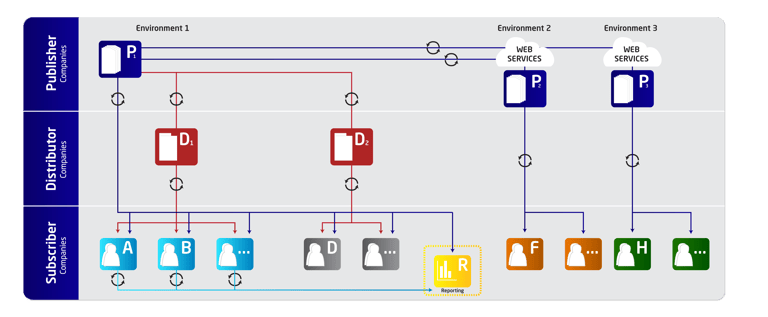 This means the group can work with a clear separation between central and local data. Changes are made in one place and are propagated in a controlled manner throughout the rest of the organization, reducing duplicate work and minimizing the risk of errors.
Governance, consistency, and scalability
A key advantage of Multi Entity Management is that master data management becomes a governed process rather than a manual discipline. The solution supports clear rules for data ownership and maintenance, creating transparency and consistency across legal entities.
At the same time, the solution is scalable. When new legal entities or databases are created, they can easily be connected to the existing structure without significantly increasing complexity. This makes the solution particularly suitable for growing companies or organizations undergoing ongoing structural changes.
Find more information about Business Central standardized extensions for master data management on Microsoft Marketplace.